Google’s Universal Commerce Protocol and the Direction of Search
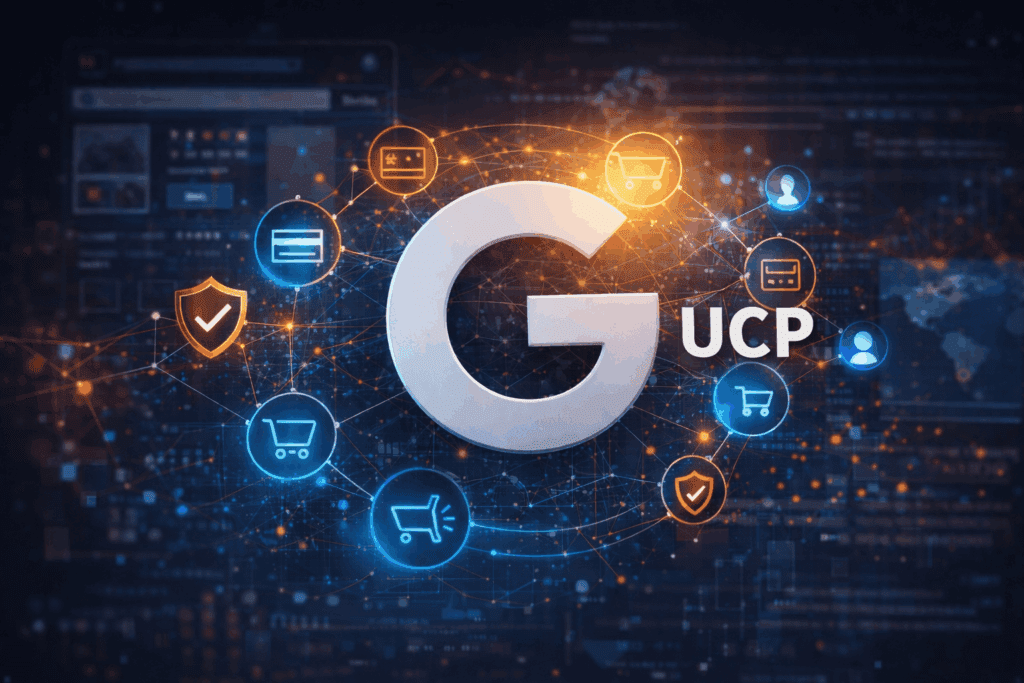
When Google introduces something with the word protocol in the name, it’s usually a mistake to treat it as a feature.
The Universal Commerce Protocol (UCP) is not an optimization checklist, a new ranking factor, or a short-term tactical lever. It’s a signal — and like most signals Google sends, it’s more about where systems are headed than what teams should “do” next.
UCP isn’t about commerce alone
At a surface level, the Universal Commerce Protocol is framed around commerce: products, transactions, and structured interactions between buyers, sellers, and platforms.
That framing is accurate, but incomplete.
What UCP really represents is an effort to standardize how intent, trust, and action are connected across Google’s ecosystem. Search has always been good at discovery. Over time, it has become better at evaluation. What it has struggled with is reliably bridging the gap between understanding and doing.
UCP is an attempt to formalize that bridge.
From documents to entities to transactions
If you look at Google’s evolution over the last decade, there’s a clear progression:
- Early search focused on documents and keywords
- Modern search focuses on entities, relationships, and intent
- The next layer is validated action
Commerce is simply the most obvious place where this matters. Transactions require:
- identity
- trust
- consistency
- accountability
Those same requirements increasingly apply to information itself.
UCP fits naturally into this trajectory. It’s less about enabling shopping and more about enabling structured, trustworthy interaction at scale.
Why this matters for search strategy
For years, search strategy has been shaped by a separation between:
- content (what’s published)
- authority (who’s trusted)
- conversion (what happens next)
Systems like UCP collapse those distinctions.
When discovery, validation, and action are part of the same system, ambiguity becomes a liability. Inconsistent entities, fragmented brand signals, and loosely structured content don’t just affect rankings — they affect whether systems are willing to connect intent to outcome at all.
That’s a meaningful shift.
This is not a new optimization surface
One of the risks with concepts like UCP is that they quickly get reduced to:
- markup advice
- feed requirements
- “best practices”
That’s missing the point.
Protocols don’t reward tactics. They reward alignment.
Organizations that benefit most from changes like this tend to already have:
- clear entity definitions
- consistent signals across platforms
- internal agreement on what the brand represents and offers
- systems that scale without contradiction
UCP doesn’t create that work. It exposes whether it’s been done.
The quieter implication: fewer shortcuts
As systems become more integrated, there’s less room for isolated wins.
Historically, it was possible to:
- rank without trust
- convert without clarity
- optimize pages without aligning the brand
That window is closing.
The Universal Commerce Protocol is another step toward a search environment where coherence matters more than cleverness. Where systems look for reinforcement across signals rather than isolated performance.
For organizations used to tactical wins, that can feel restrictive.
For organizations invested in structure, it creates leverage.
How I’d think about UCP today
If you’re trying to “optimize for” the Universal Commerce Protocol, you’re already late — and probably focused on the wrong thing.
A more useful lens is to ask:
- Is our entity clearly understood across platforms?
- Are our trust signals consistent, or merely present?
- Does our content align with what we actually want users to do?
- Would a system feel confident connecting intent to action on our behalf?
Those questions matter whether you sell products, services, or ideas.
The bigger takeaway
The Universal Commerce Protocol isn’t a commerce initiative in isolation. It’s another step in Google’s long-term effort to reduce ambiguity between discovery, understanding, and action.
Search is moving toward systems that don’t just surface information, but stand behind outcomes.
That doesn’t change the fundamentals — it sharpens them.
And for organizations willing to think structurally rather than tactically, that’s not a threat. It’s an advantage.